1,000-year-old coral is telling us much about this winter's El Niño
Scientists cracked open ancient Galápagos coral like tree rings and found this year's El Niño swings are unprecedented.


(Julia Cole, University of Michigan)
In the warm Pacific waters off the Galápagos Islands, a coral colony has been keeping a diary of the ocean since the year 1000.
Every year, its new growth layer locked in a chemical fingerprint of the ocean temperature at the time. Scientists have just finished reading a thousand of those layers, and what they found is telling us so much about this winter’s El Niño.
Reading the ocean's diary
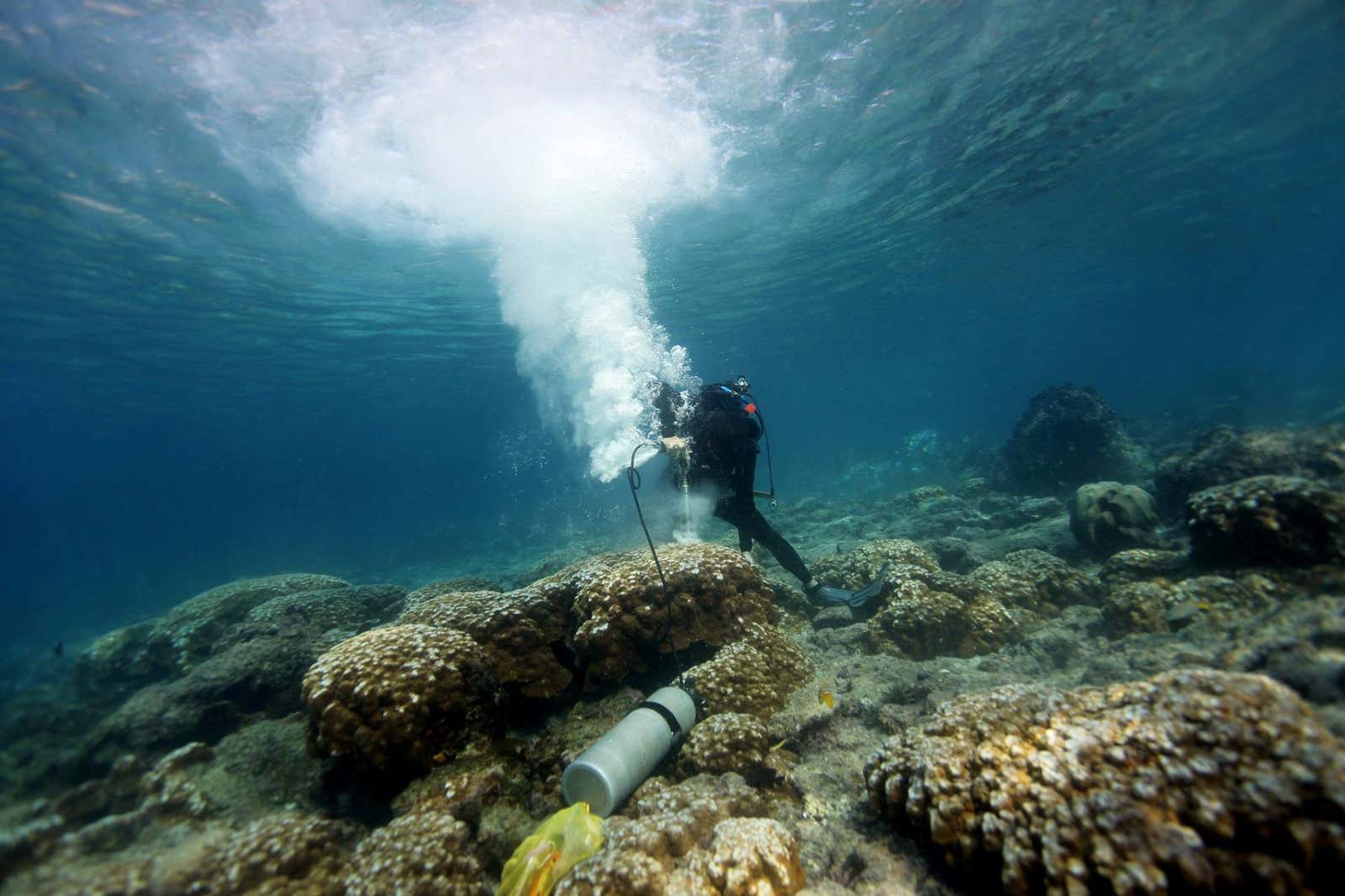
The team of scientists drilled cores out of 13 coral colonies, a mix of living reefs and long-dead coral boulders, across five Galápagos Islands. Inside each core, they measured two chemical ratios — strontium-to-calcium and oxygen isotopes.
(MORE: What a historic super El Niño ahead means for your fall and winter)
Acting as a built in thermometer, the ratios shift depending on how warm or cool the water was when that sliver of coral grew.
Then scientists were able to string the data from those readings together, revealing temperature records stretching from the year 1000 up to 2015.
Get More of Our News on Google
Set The Weather Company as a 'Preferred Source' to get quicker access to the news you value.

It’s basically a diary of the eastern Pacific's temperature swings for a millennium.

(Julia Cole, University of Michigan)
We haven’t seen anything like this in 1,000 years
The data shows that since 1984, El Niño-driven temperature swings have been 36.5% larger than they were, on average, during the preindustrial period from 1000 to 1850. They're even 16.2% larger than typical swings just last century. Data also shows that the warm extremes are now outrunning the cool ones.
(MORE: Don't fall for these myths about El Niño)
"We don't see a time in the past where El Niños have been as strong as today," said Julia Cole, professor of Earth and Environmental Sciences at the University of Michigan and co-author of the study. Adding, "our findings tell us that the big El Niño events of the last 40 years are not normal in the context of the last thousand years."
(NOAA)
El Niño is driving our winter season this year. It’s the reason the Southeast can see more flooding and the Pacific Northwest can dry out. It's why the Northern Plains freeze while the South stays unusually mild.
The study shows that El Niño's swings are truly getting bigger, which doesn't mean we will see "more El Niños," it means the El Niños we do see will be more extreme.
A thousand years of past data shows that right now, we're living through more extreme El Niños than anything we’ve experienced in the historical record.
Loading comments...