El Niño explained region by region: What it means for your winter
Here’s our easy guide for what El Niño could actually mean for temperatures, rain and snow where you live.


The weather myths about El Niño you’re probably getting wrong
If you’re wondering whether El Niño means a snowy winter, tons of rain or something in between, here’s the simplest answer: It depends where you live.
These maps give you a plain picture of what you can expect from December through February.
Warmer vs. colder
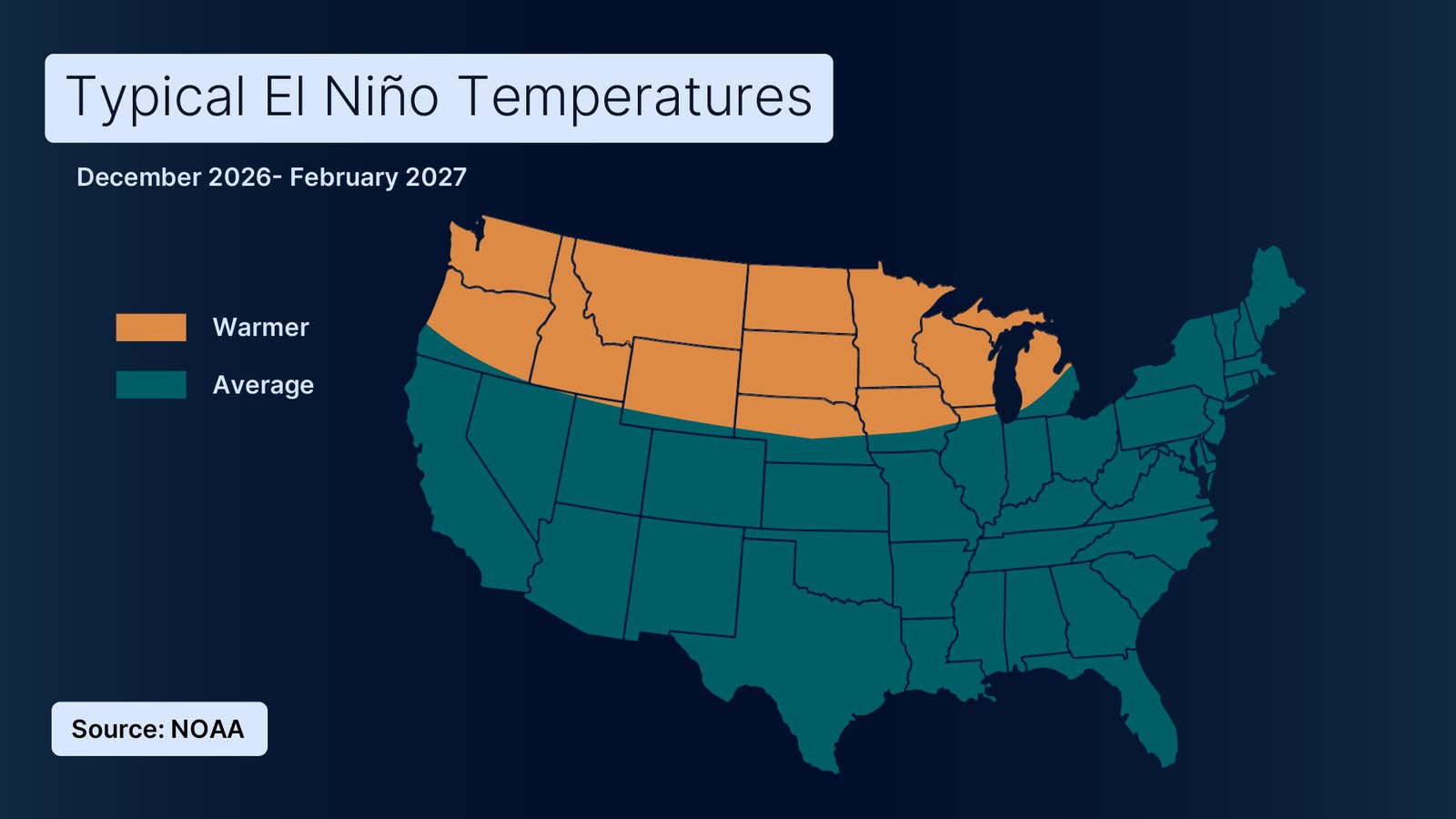
The Northern Tier has the strongest odds of a warmer-than-average winter, including the Pacific Northwest, northern Rockies, northern Plains and parts of the Great Lakes.
But don't read "warmer" as "warm." Basically, if January normally averages 35 degrees where you live, an El Niño winter might average 38. You'll still have cold days, and even snow.
The West, Midwest, South and East coast are expected to be closer to normal, temperature-wise.
(MORE: Prepare your bank account and grocery cart for a record El Niño)
Get More of Our News on Google
Set The Weather Company as a 'Preferred Source' to get quicker access to the news you value.

Wetter vs. drier
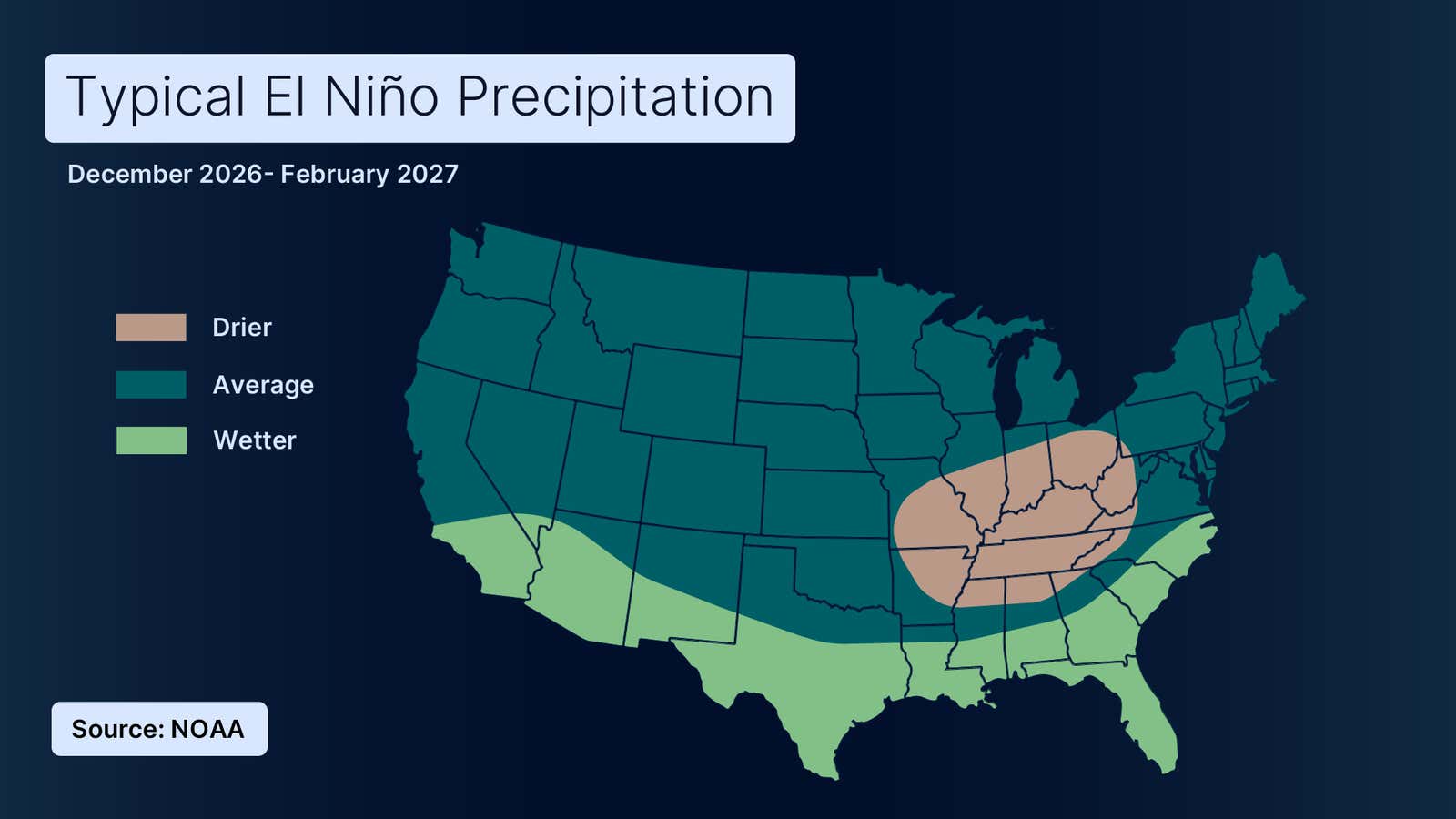
The South and parts of California are among the wetter spots. That can mean heavy rain and flash flooding in lower elevations, while higher elevations could get significant snow.
The Sierra Nevada, Wasatch and Southern/Central Rockies could be the snow jackpot as wetter storms meet that cold mountain air.
Meanwhile, parts of the Ohio Valley are more likely to be drier, potentially meaning less snowpack.
Will El Niño bring snow to the South?
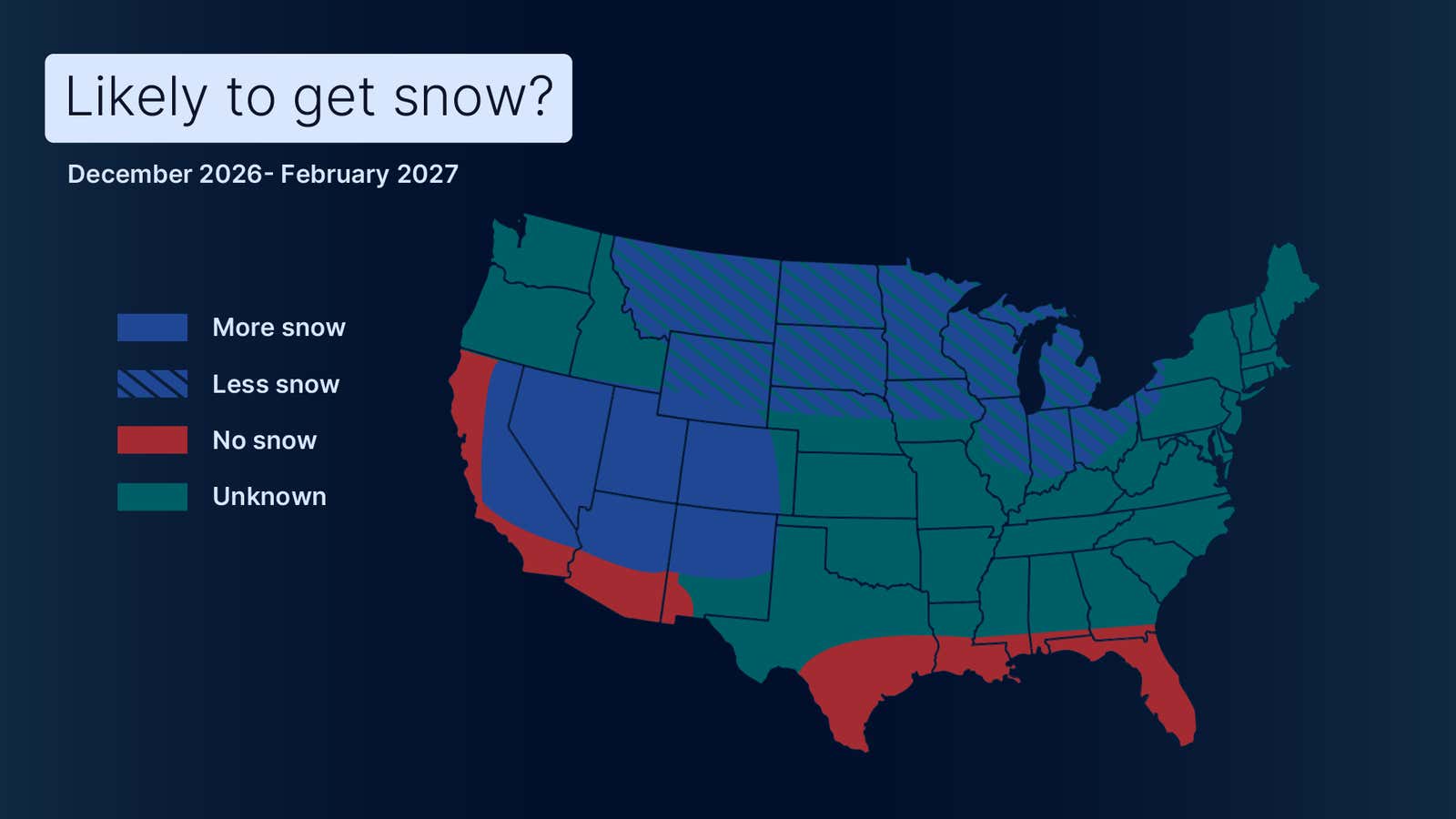
For the Ohio Valley, Mid-Atlantic, Northeast and much of the South, rain versus snow is going to be a game-time call.
In other words, just because there will be extra moisture, doesn’t automatically mean there will be cold air for it to mix with.
Southerners may just be in for a soggy season, but can hold out hope until later in winter when colder air is more prevalent.
(MORE: Don't fall for these myths about El Niño)
Where will we see the strongest El Niño impacts?
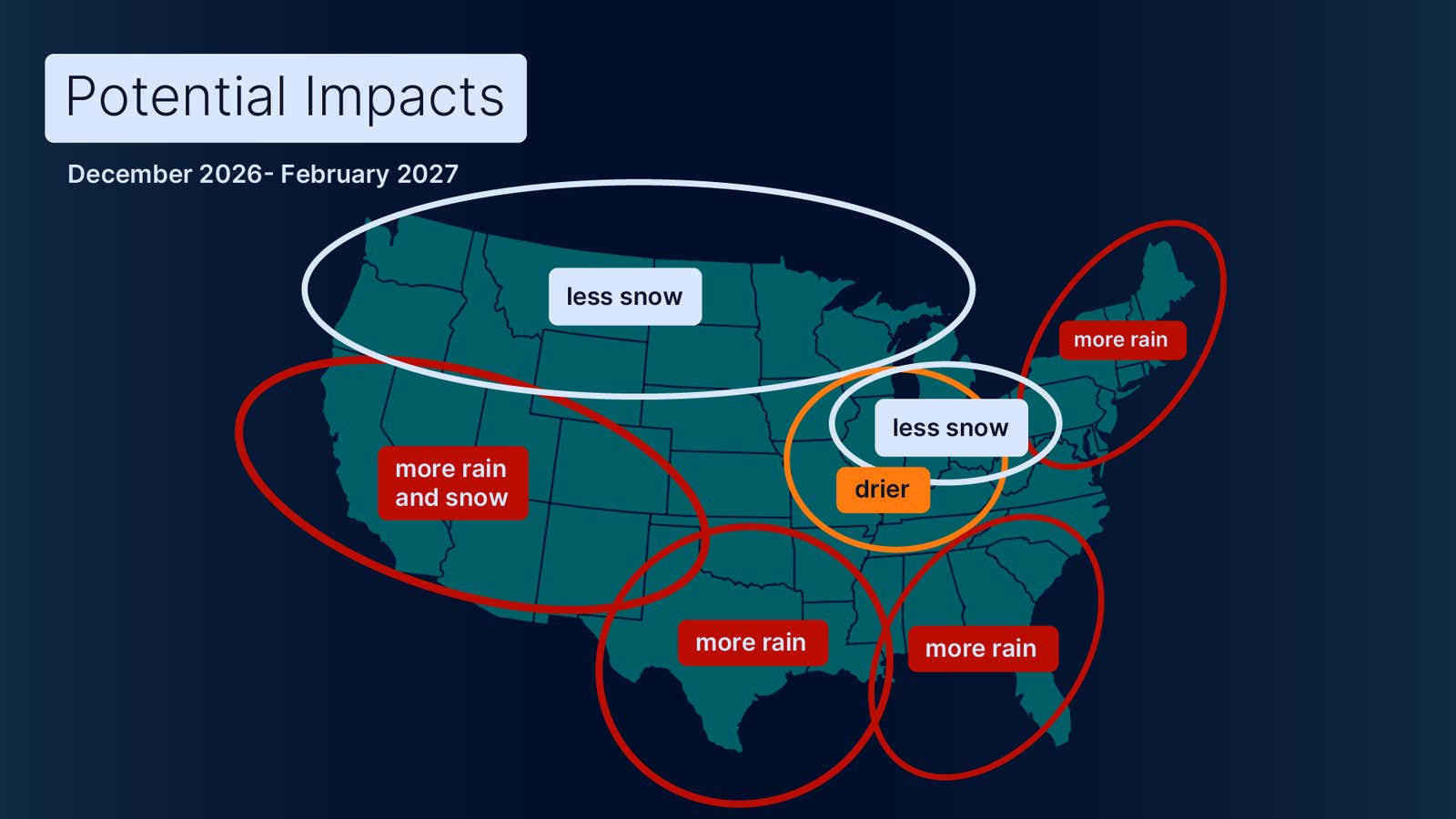
California, the Southwest, South and New England could face the biggest wet-weather impacts, while the Pacific Northwest, Northern Rockies and Great Lakes could see drought and a disappointing snow season.
And for a huge swath of the central U.S. and Ohio Valley? It's still basically a coin flip. One big storm and the correct conditions could still deliver hefty snow, even during a drier year.
Want a more in-depth look at what could be ahead? Check out our detailed maps here.
Loading comments...