Breaking down the Saffir-Simpson Hurricane Wind Scale
The scale has been in use for decades and gives an idea of what kind of wind damage a hurricane can produce.

Hurricane categories explained: what each wind speed means
The Saffir-Simpson Hurricane Wind Scale is one tool for assessing the intensity of a hurricane.
Each Category has a description of what it means in terms of wind impacts, but there is more to hurricanes than just wind speed.
What it measures
The Saffir-Simpson Hurricane Wind Scale rates a hurricane's sustained winds. That means gusts can be higher than the category's range.
Category 1: Sustained winds of 74 - 95 mph
Category 2: Sustained winds of 96 - 110 mph
Category 3: Sustained winds of 111 - 129 mph
Get More of Our News on Google
Set The Weather Company as a 'Preferred Source' to get quicker access to the news you value.

Category 4: Sustained winds of 130 - 156 mph
Category 5: Sustained winds greater than 157 mph
Major hurricanes are Category 3 or higher on the scale.
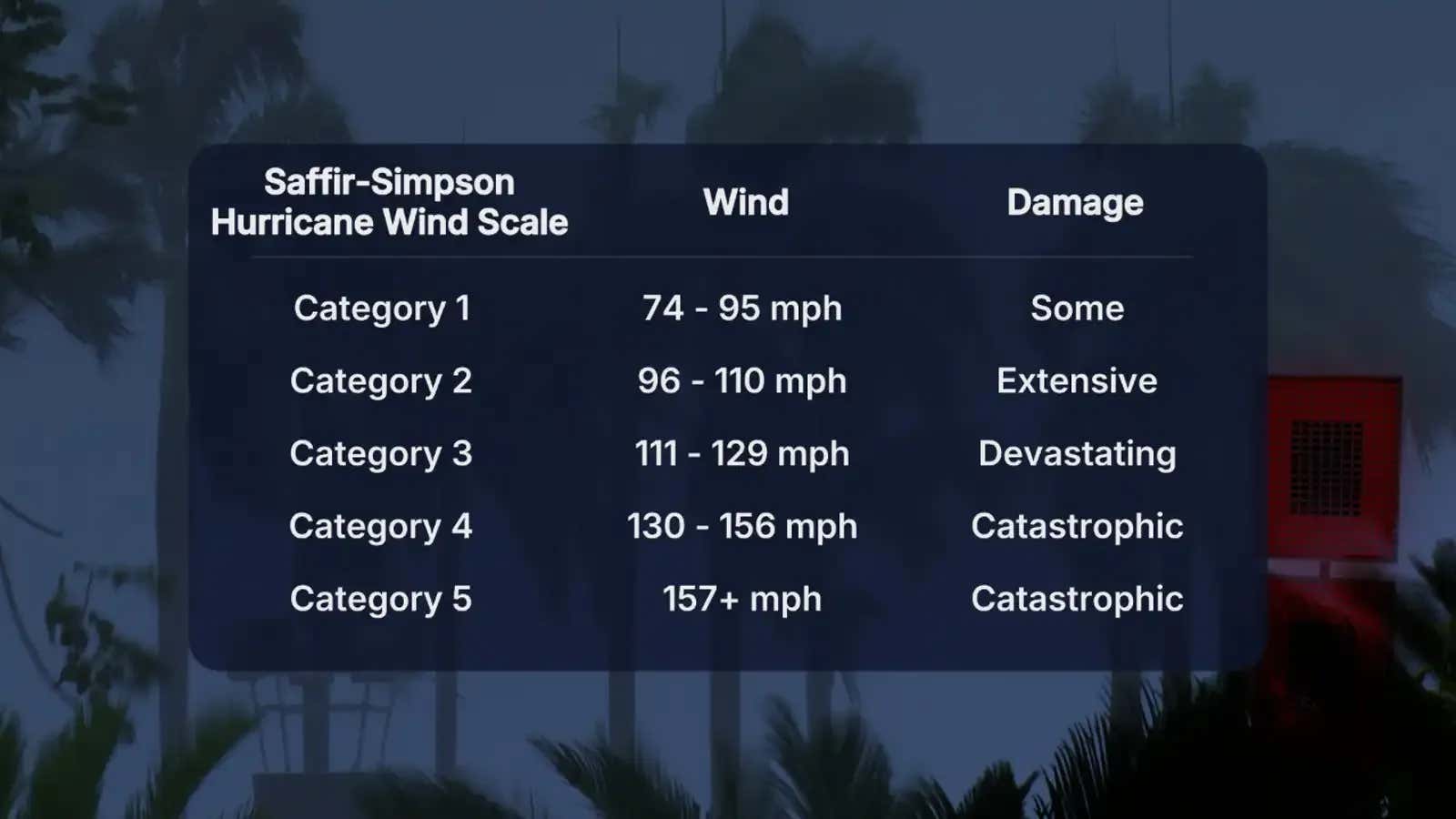
Saffir-Simpson Hurricane Wind Scale
Damage by category
In general, wind damage rises by about a factor of four for every category increase.
Category 1 hurricanes have "some damage," which means that well-constructed homes could have some damage to roofs, shingles, vinyl siding and gutters. Large branches of trees will snap, and trees with shallow roots may be knocked over. Power outages could last several days.
Category 2 hurricanes have "extensive damage," which means that well-constructed homes could sustain major roof and siding damage. Trees with shallow roots will be uprooted and block numerous roads. Power outages could last several days to weeks.
Category 3 hurricanes have "devastating damage," which means well-constructed homes may have major damage including the removal of roof decking and gable ends. Many trees will be uprooted. Electricity and water will be unavailable for several days to weeks after the storm passes.
Category 4 hurricanes have "catastrophic damage," which means well-constructed homes can lose most of the roof and/or some exterior walls. Trees and power poles will be down, leading to isolated residential areas. Power outages can last months, and most of the area will be uninhabitable for weeks to months.
Category 5 hurricanes could see a high percentage of framed homes being destroyed with total roof failure and wall collapse. Power outages will likely last months, and most of the area will be uninhabitable for months.
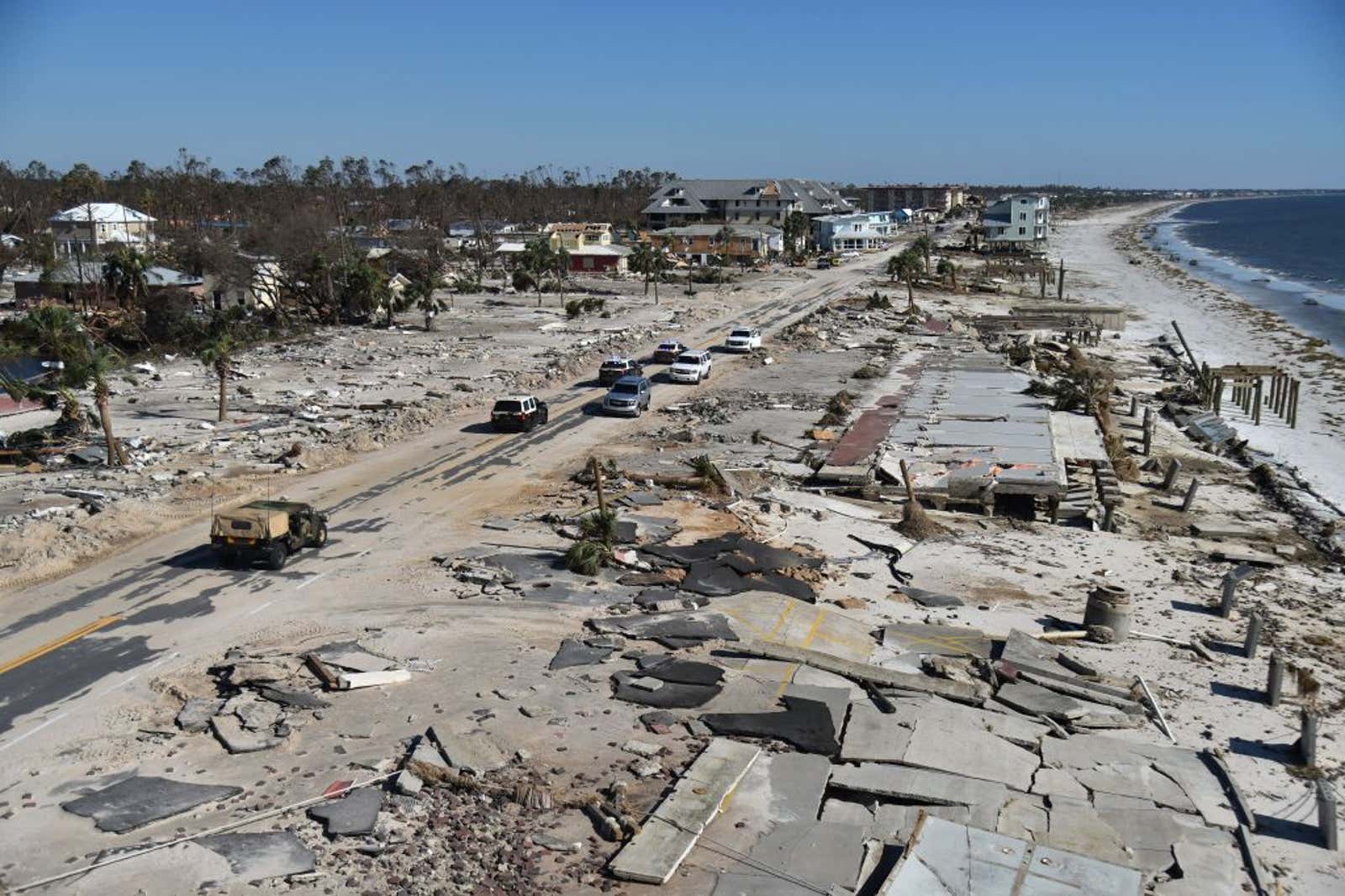
Hurricane Michael became the first Category 5 hurricane to make landfall in the contiguous United States since Hurricane Andrew in 1992.
(Getty Images)
It's not just just about the winds
While the Saffir-Simpson Hurricane Wind Scale is helpful for determining the strength of a storm, it doesn't paint the entire picture.
Storm surge doesn't necessarily follow the same scale as the Saffir-Simpson Hurricane Wind Scale. Some weaker storms on the wind scale can bring devastating coastal flooding.
Hurricane Ike in 2008 made landfall in Texas as a Category 2 storm, but its storm surge was significantly stronger than a standard Category 2 hurricane. This is because it was significantly larger, so it was able to push much more water to the coast. Storm surge heights reached 20 feet, which then leveled most structures on Texas's Bolivar Peninsula.
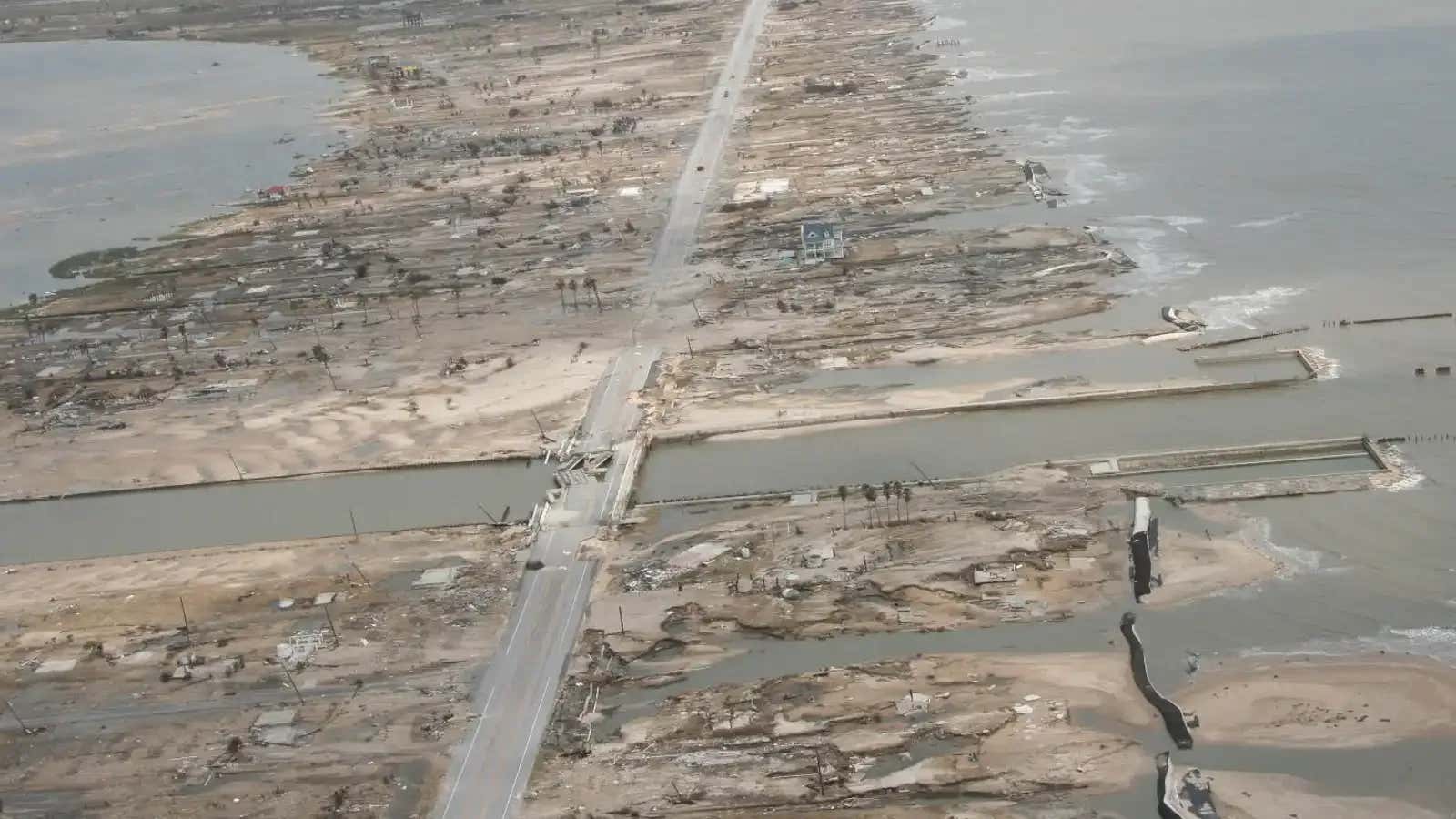
The Bolivar Peninsula wiped clean of structures by Hurricane Ike's massive storm surge in September 2008.
(NOAA)
Flooding also doesn't follow the wind scale. Tropical storms have the potential to create significant rainfall should they slow to a crawl when they move inland. A fast-moving major hurricane would still bring flooding, but in this case, the tropical storm would dump more rainfall.
Tropical Storm Edouard in 2026 struggled to develop amidst strong El Niño conditions but was able to make landfall and bring over a foot of rain across parts of the Gulf Coast.
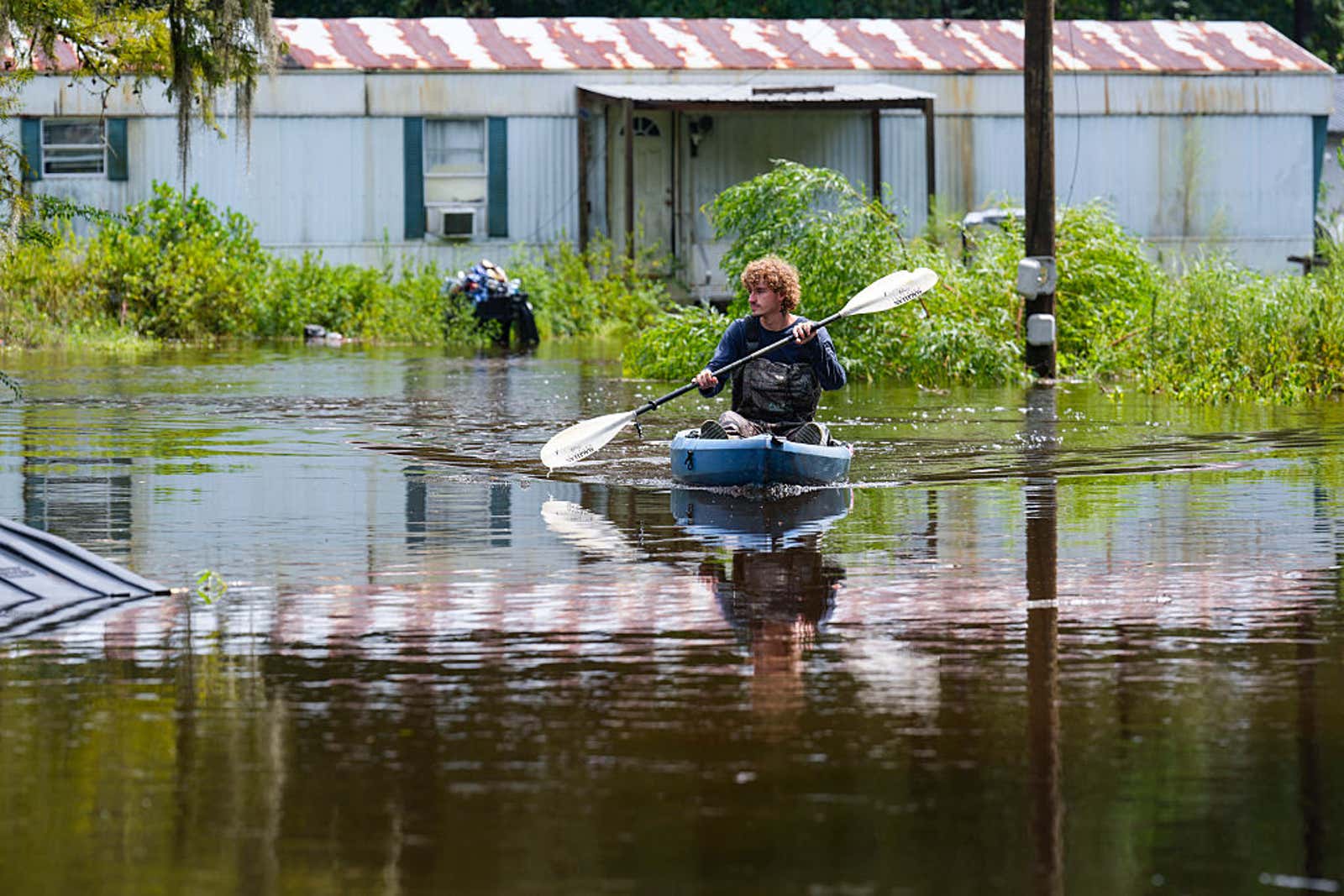
Tropical Storm Edouard brought over a foot of rainfall to parts of the Gulf Coast.
(Getty Images)
Tropical Storm Imelda in September 2019 produced over 30 inches of rain in southeast Texas, causing widespread flooding. The damage estimate was $6.2 billion (2025 dollars), according to NOAA. Another famous example is Tropical Storm Allison in 2001, which caused massive flooding in southeast Texas, including Houston, resulting in $15.1 billion (2025 dollars) in damage and killing 43 people. Allison was notable in that its name was retired when it was only a tropical storm.
How rare are Category 5 hurricanes?
There have been just 45 recorded in the Atlantic Basin since 1924, according to NOAA's historical database. But, that number has been on the increase in recent years, not including the impacts of the notable El Niño in 2026's hurricane season. Between 2024 and 2025, there were five Category 5 hurricanes: Melissa, Humberto, Erin, Beryl and Milton.
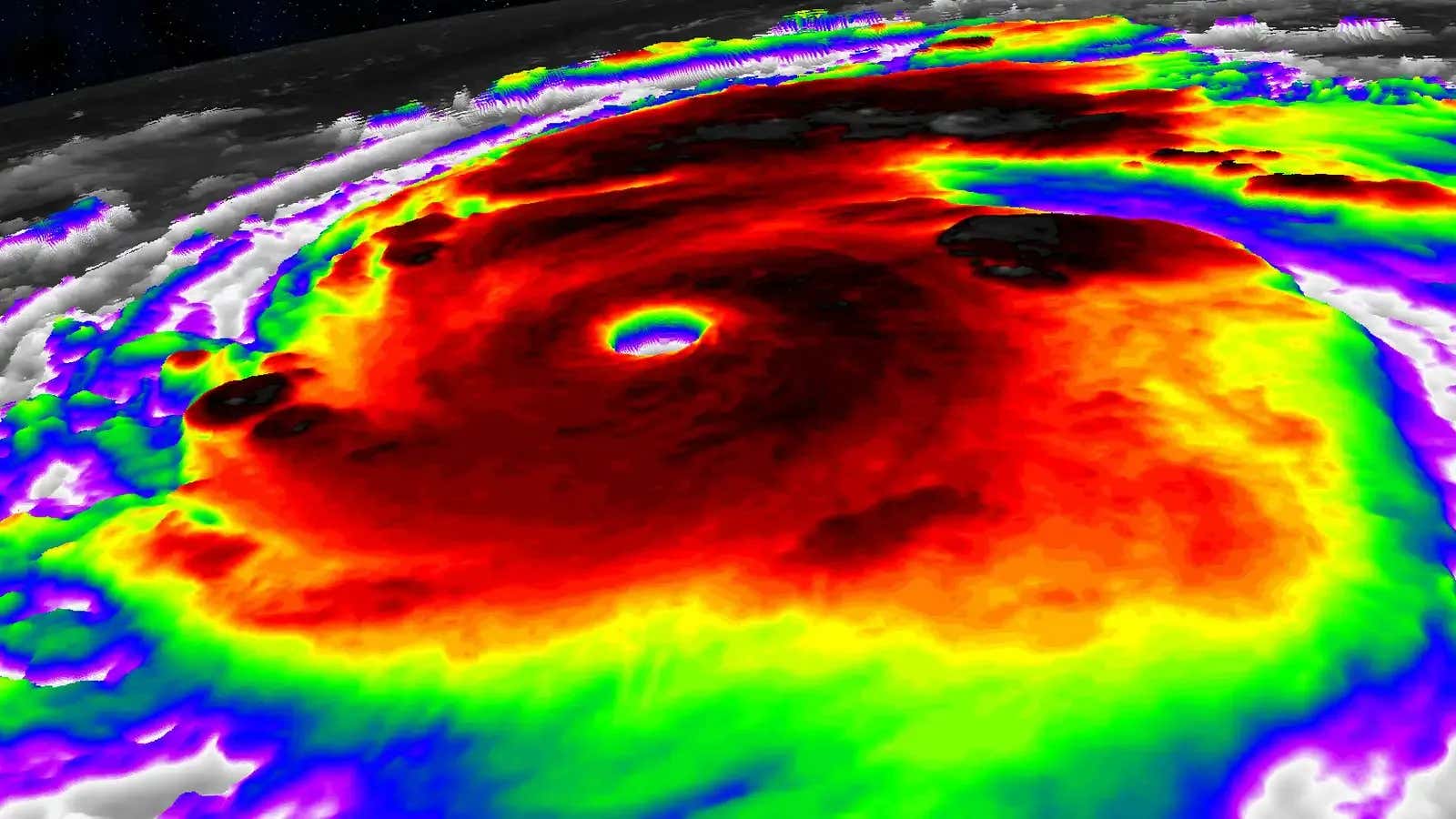
Enhanced 3D satellite view of Hurricane Beryl as a Category 5 in July 2024.
How did we get the scale?
It first came into use more than 50 years ago and is named for its developers, Herbert Saffir, a consulting engineer who lived in Florida, and Dr. Robert Simpson, who was then the director of the National Hurricane Center. The earliest published versions of the scale date to 1972.
Loading comments...