The West’s best shot at snowpack recovery comes from El Niño
A warmer ocean will likely lead to more rain and snow from California to the Four Corners this winter.

El Niño could boost Lake Mead, Lake Powell and the Sierra snowpack
After years of diminishing winter snowpack and lowering lake levels in the West, El Niño could make this the year to recharge those reservoirs, including California’s watershed, and lakes Mead and Powell.
Supercharged pipeline of moisture
The Sierra Nevada and the Rockies are likely to see a lot of help from a jet stream called the Pineapple Express.
This rainmaking "firehose" is a direct movement of moisture from around Hawaii to the West Coast of the U.S. and Canada during the winter months. It is naturally occurring and is a frequent cause for flood concerns and mountain snow in California.
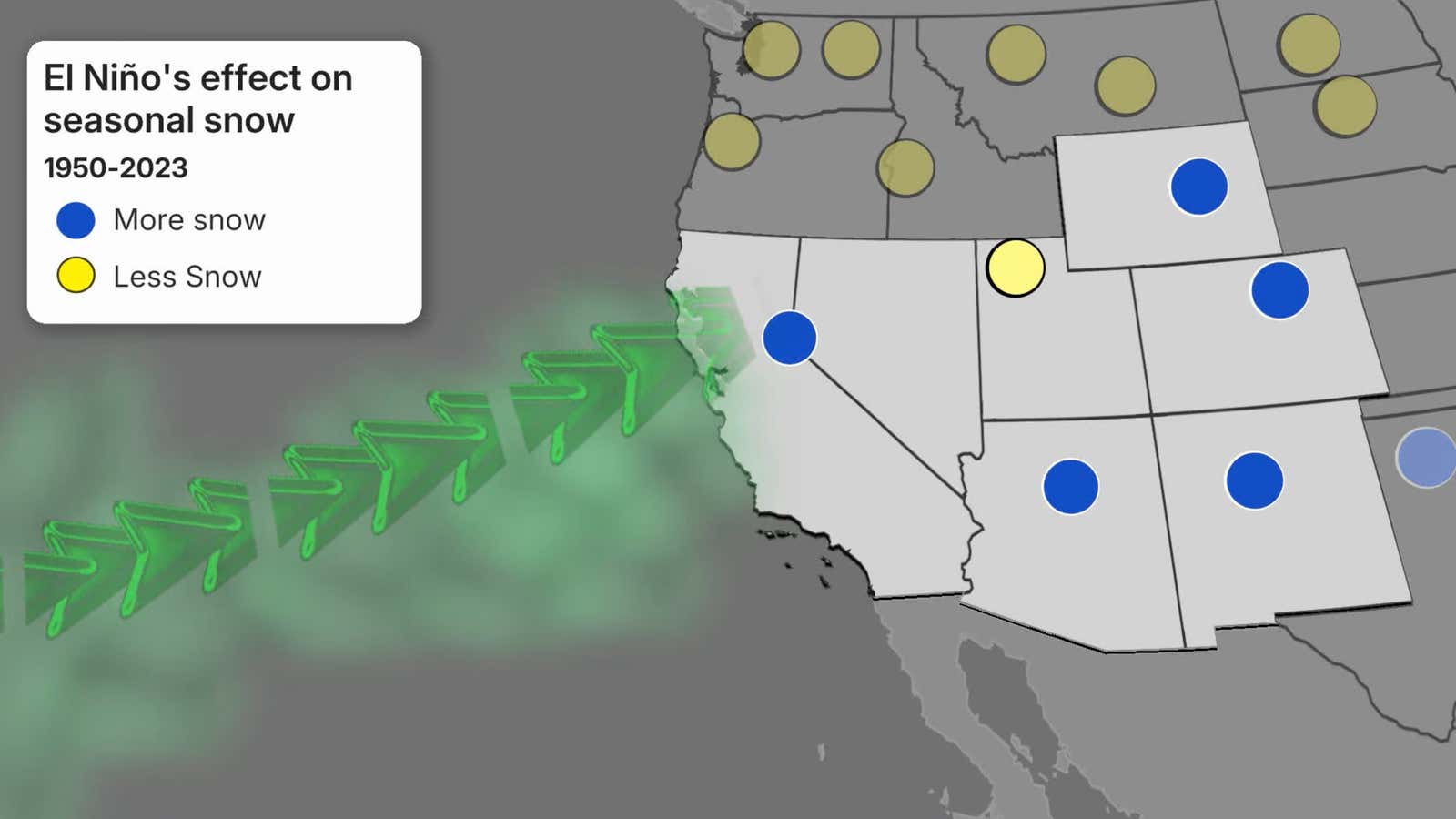
El Niño tilts the odds toward a wetter, more active Pacific storm track. El Niño’s heat across the Pacific warms the atmosphere and allows it to hold more moisture to be transported toward North America.
El Niño doesn't decide where the precipitation lands, which is dictated by Pacific storm systems moving from west to east across the West Coast.
(DEEPER DIVE: El Niño to turn up California's moisture source this winter)
Get More of Our News on Google
Set The Weather Company as a 'Preferred Source' to get quicker access to the news you value.

El Niño is set to bring above-average rain and snow to much of the Southwest.
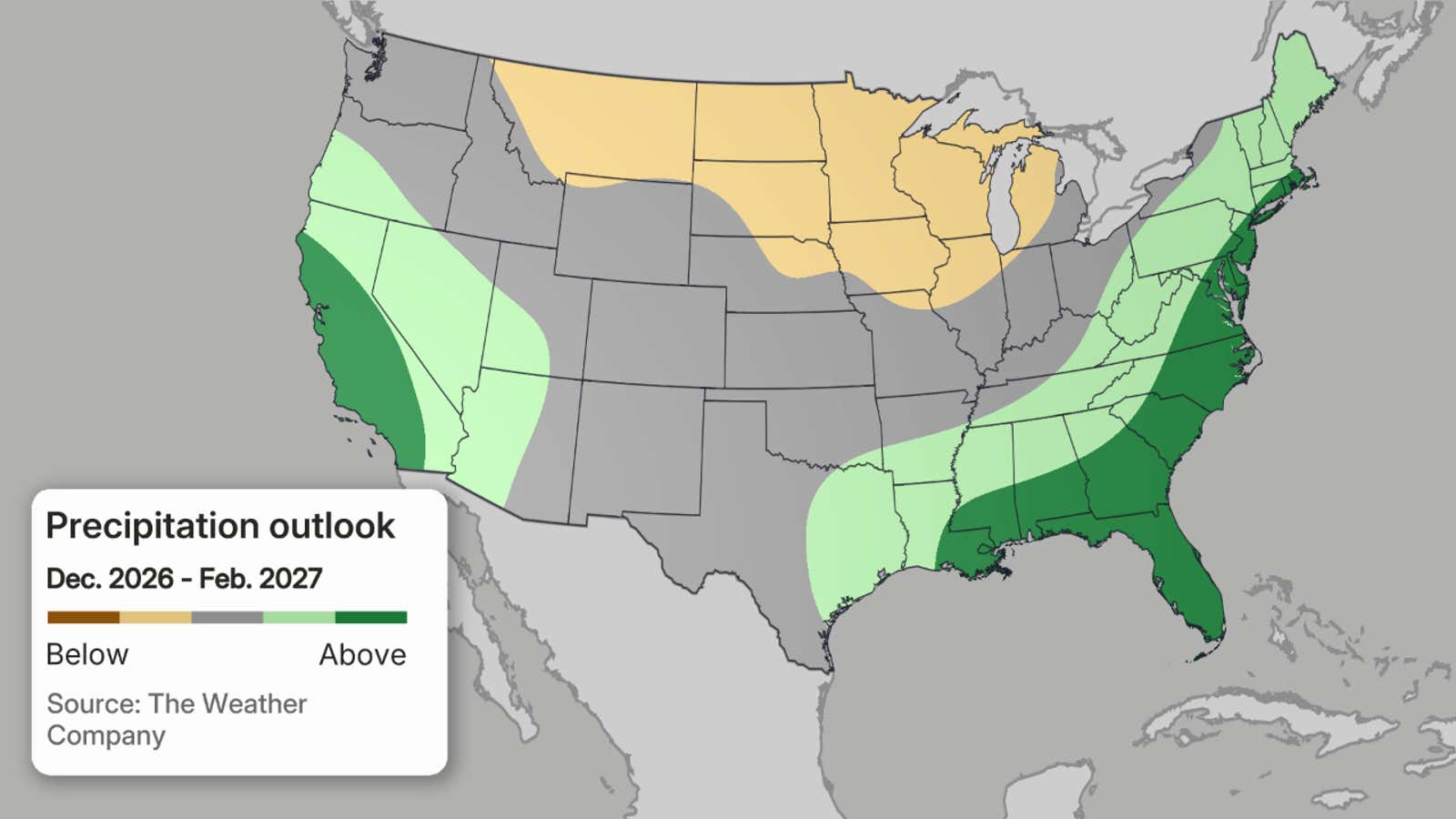
December 2026 through February 2027 precipitation outlook
Importance of healthy reservoirs
The snowpack in the Sierra acts like a major reservoir for drinking water in California long after the snow is gone.
California gets about 75% of its annual precipitation during the wet season that runs from November through March. That includes both rain and snow. In some parts of the state, the number is as high as 90%.
(MORE: Latest winter outlook)
This snowpack is an icebox for water storage that can be thawed out during the spring and summer months and sent into rivers across the state. That water is what California relies on for about one-third of its water supply.
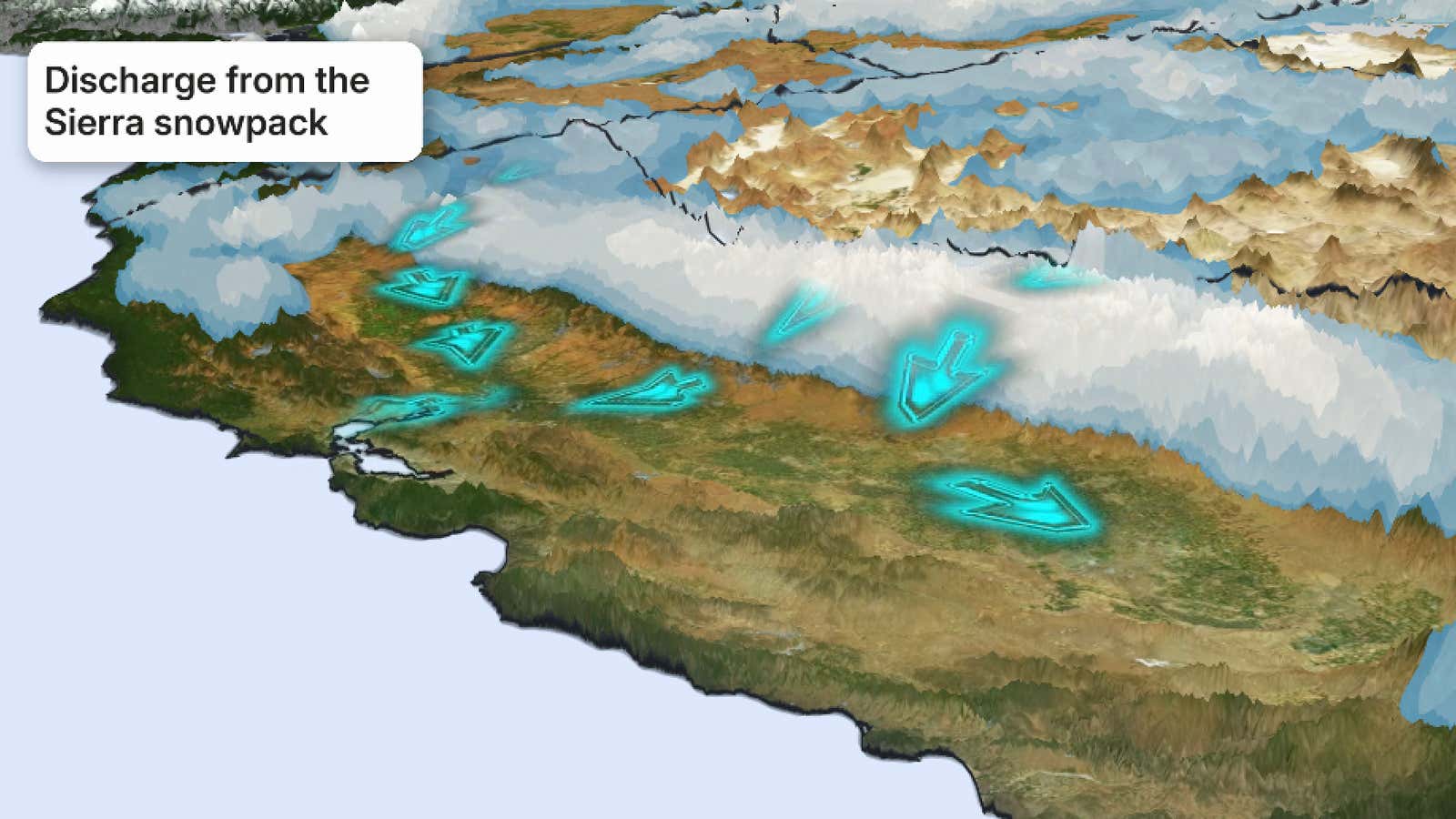
The moisture from the Pacific often spreads well east of the Sierra Nevada, often dropping rain and snow into the Four Corners and Rockies.
Lakes Mead and Powell could surge by next spring, leading to more usable water and power in cities like Las Vegas.
We probably won't be talking about record low water levels at this time next year.
Loading comments...