Fall's first freeze: Here's when it arrives in your area
The first fall freeze ranges from September to November, depending on location and elevation. See when yours arrives.


Your first freeze is coming: average dates across US by region
Your first fall freeze is coming, but when it arrives depends a lot on where you live. For most of us, it ranges from September through November.
First freeze
This is when the temperature drops to 32 degrees or lower for the first time in the colder months of the year. It signals the end of the growing season — the threshold when unprotected plants can become damaged if temperatures remain at or below freezing for multiple hours. Most vegetation is destroyed when temperatures reach 28 degrees or colder, which is called a hard freeze, according to NOAA.
(Winter outlook: El Niño could fuel Southern snow threat into early 2027)
The map below shows the average date of the first fall freeze, using the latest 30-year data (1991-2020) from NOAA.
Different weather patterns each year can make the first freeze occur earlier or later than the average shown for a given city or region. In fact, the earliest freeze on record for the selection of cities below occurred nearly a month or more before the average date.
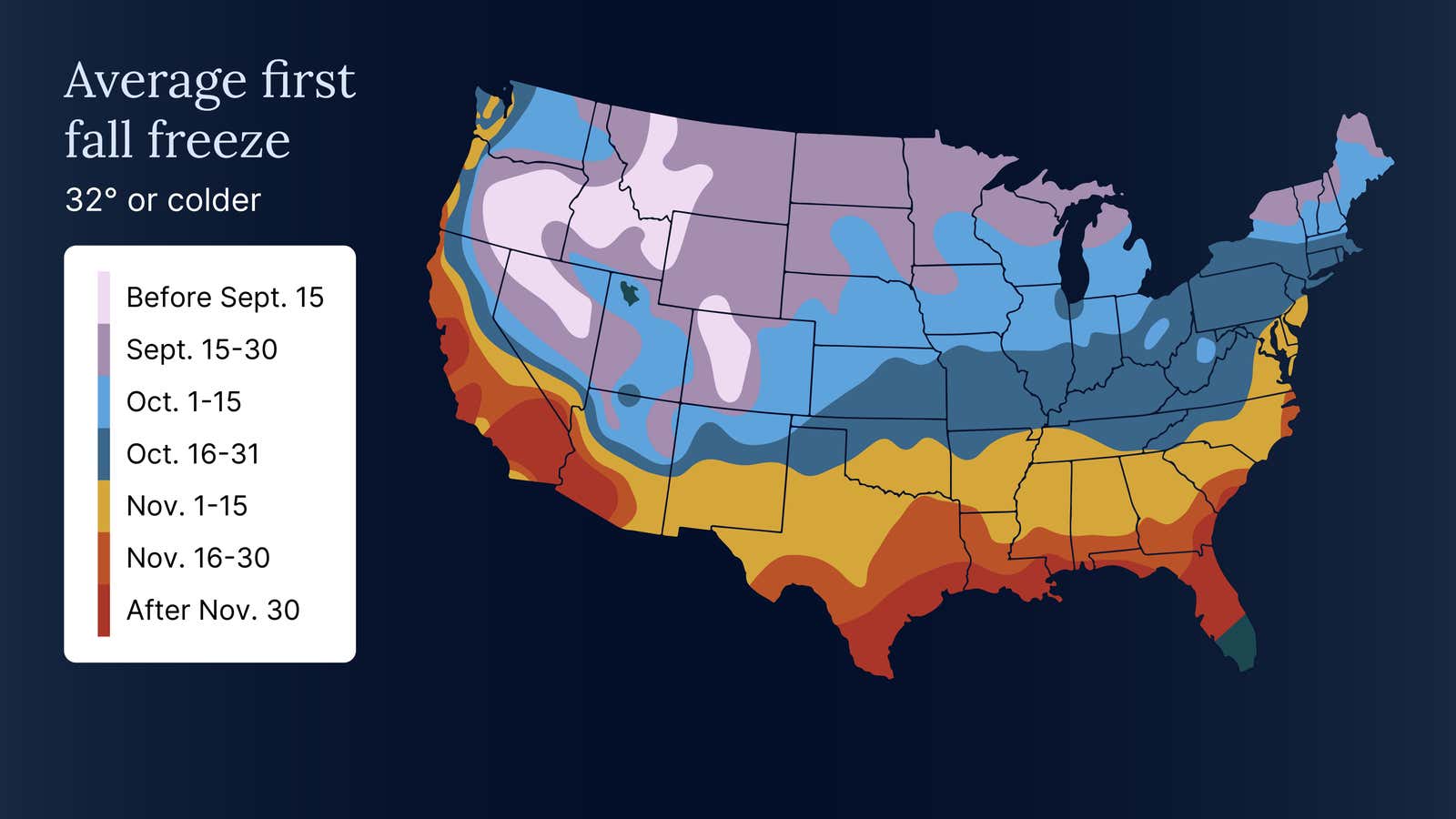
Regional breakdown
Rockies, Intermountain West and Northern Plains: The first freeze will arrive by the end of September in areas of higher terrain and across the Northern Plains. Missoula, Cheyenne and Bismarck typically see their first freeze in September, while Salt Lake City, Denver and much of the Four Corners region can wait into October.
Get More of Our News on Google
Set The Weather Company as a 'Preferred Source' to get quicker access to the news you value.

Northeast and Midwest: The first dip to 32 degrees will arrive by Halloween in cities including Chicago, Kansas City and St. Louis, and across much of New England away from Interstate 95. Then it'll happen in early to mid-November for Boston and New York City, with the help of the relatively warmer Atlantic plus urban heat.
Northwest: Terrain plays a big role in exactly when you see the first freeze here. If you're east of the Cascades, it often comes between late September and early October. But if you're west of the Cascades, this freeze could wait until early November. In the cities, it can be a bit later, especially in Seattle on the relatively warmer Puget Sound. Seattle and Portland see an average first freeze in mid-November.
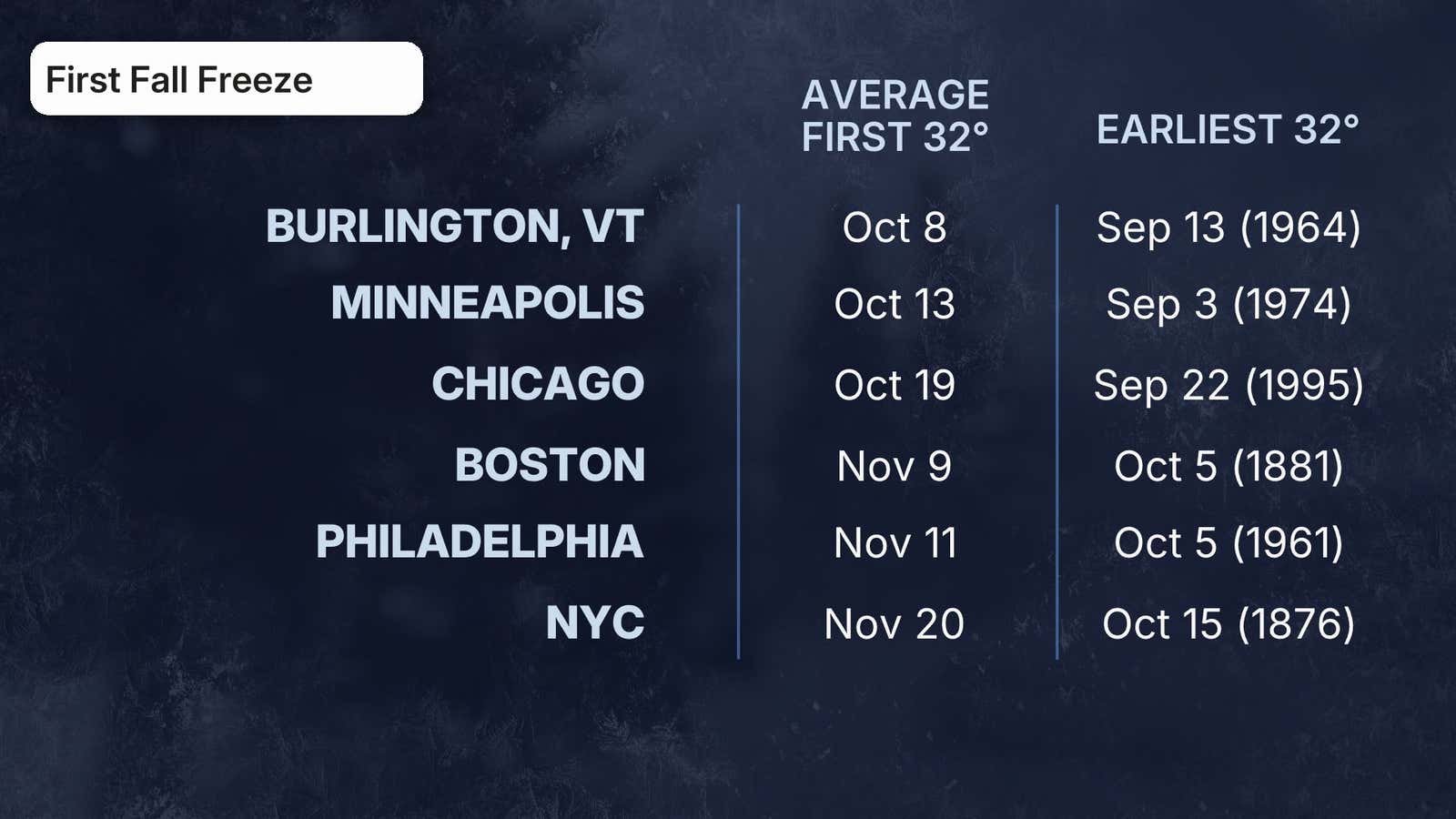
Average date of the first freeze vs. earliest freeze on record for northern cities
The coastal mid-Atlantic, South and Southern Plains: You'll have to wait until November in cities like Atlanta, Dallas, Memphis and Washington. The warmer Gulf Coast has to wait even longer, until December. You probably won't have to worry about the heavy jacket until early December in Houston and until Christmas or the new year in New Orleans and Miami if they freeze at all.
Florida is a completely different animal.
The weather in North Florida acts much differently compared to the weather in South Florida — almost like two different states.
Cities north of Orlando (Jacksonville, Gainesville, Tallahassee) have a much higher probability of seeing a freeze each year compared to cities farther south. Some South Florida cities have much rarer chances of freezing in any given year. Miami's earliest freeze on record is Dec. 11, but many years don't see a freeze, at least in the urban area. Don't tell the iguanas, though.
California and Arizona: Outside of the Sierra Nevada, the first freeze is often in November or December, on average. The higher terrain in Arizona can freeze as early as September. Coastal cities, including Los Angeles and San Francisco, rarely freeze.
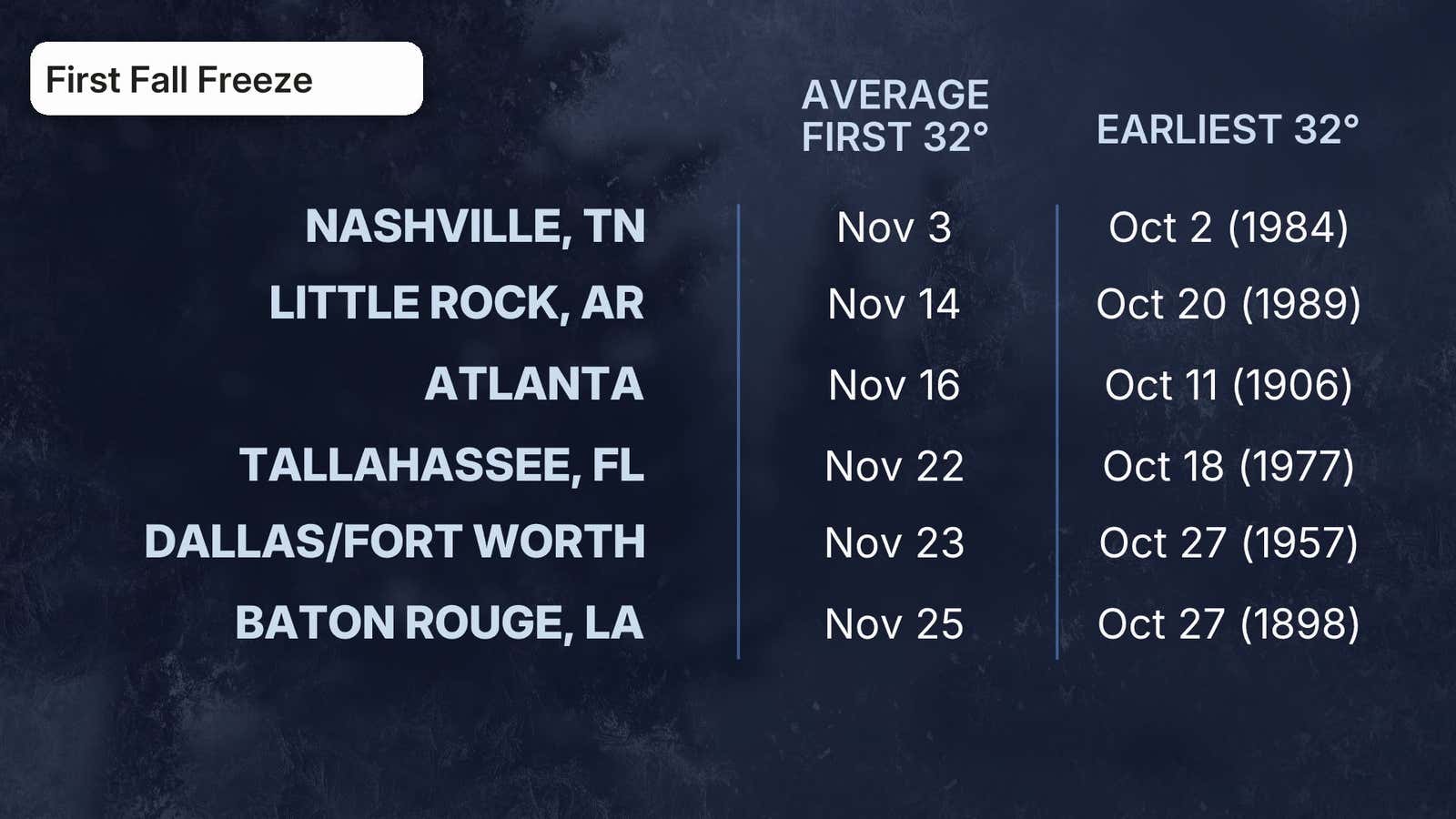
Average date of the first freeze vs. earliest freeze on record for southern cities
A few things to consider
Location and elevation are the primary deciders of when you see the first 32-degree low temperature. The first freeze is usually experienced before or right around the time fall officially begins in the higher elevations of the West and near the Canadian border.
By the end of October, the average first freeze has occurred from much of the Northeast into the Midwest, down to the Tennessee Valley and back toward the Central Plains. First freezes are common in November from the coastal mid-Atlantic into much of the Deep South.
The more concrete, steel and water near you, the later your first freeze will come. New York City and Washington are examples of the urban heat island effect, which keeps the cities themselves warmer than nearby suburbs.
The warming influence of oceans and other bodies of water also skews the first freeze date later in these locales compared to their slightly inland suburbs.
Frost arrives earlier, and it can hurt your garden. A freeze is more threatening to plants, but frost can also damage vegetation. So don't ignore those frost advisories. Frost can form when temperatures are between 33 and 36 degrees.
Loading comments...