Here are the winter storm names for 2026-27 and why they're important
When we name a winter storm, it's a high-impact event. Here's what that means for you and what past seasons have shown.

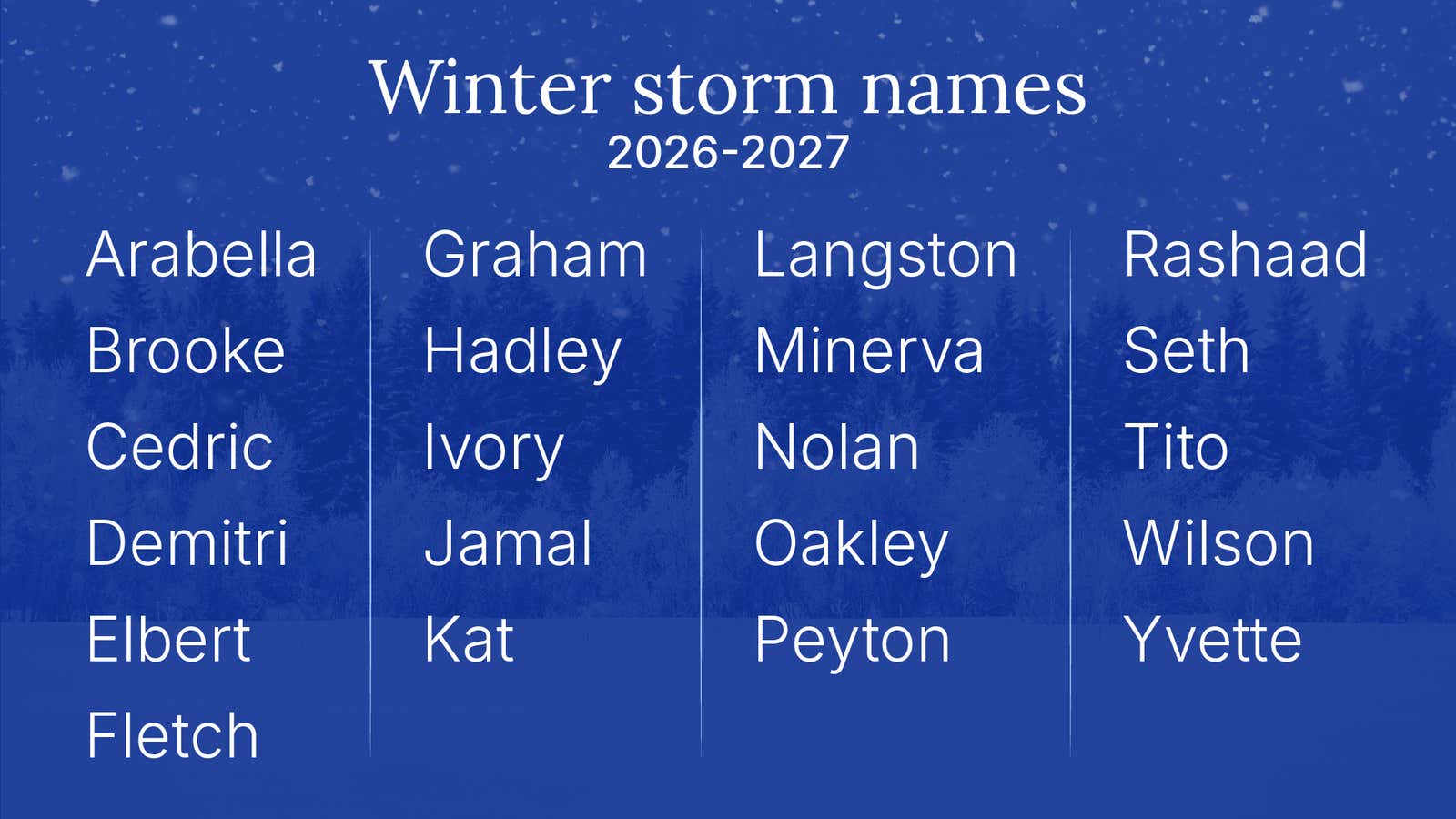
The Weather Channel will name winter storms again in 2026-27, drawing attention to snow and ice events that could have significant impacts on travel or everyday life for millions in the U.S.
This season's list
The names that will be used are shown in the graphic above.
Similar to hurricane name lists, the first storm will get the first name "Arabella," then continue down the list alphabetically.
(MORE: Complete coverage of winter weather, including outlooks)
Why do we name winter storms?
Winter storms are both disruptive and dangerous, with potential impacts including:
- Hazardous driving conditions, including slippery or impassable roads, poor visibility and the potential for stranded vehicles
- Flight delays and cancellations that can ripple across the country from winter storm-affected areas
- Risk of heart attacks from overexertion shoveling snow
- Power outages, tree damage, frozen pipes, even roof collapses due to heavy snow, ice and wind
- Hypothermia and frostbite in extreme cold
- Slips and falls on slippery streets, roads, driveways, sidewalks and parking lots
(MORE: Learn more about staying safe in winter weather)
Get More of Our News on Google
Set The Weather Company as a 'Preferred Source' to get quicker access to the news you value.

They can also be deadly.
Past studies have estimated anywhere from 30 to 70 deaths can be directly attributed to winter storms each year in the U.S.
And traffic accidents or other mishaps in winter weather account for about 1,000 deaths on America's roads each year, according to a 2022 study.
This is the 15th season The Weather Channel is naming winter storms.
It's a continuing effort to improve communication and early warning about winter storms and their impacts, much like naming has done for hurricanes and tropical storms.
The U.K. Met Office, Irish Meteorological Service (Met Éireann) and Dutch national weather forecasting service (KNMI) similarly collaborate on naming storms affecting those areas.
What these winter storms look like on a map
Winter storms are named when large areas of high-impact snow and/or ice are forecast, prompting winter storm, blizzard and/or ice storm warnings from the National Weather Service for at least one, if not multiple regions of the country.
One classic example of this was Winter Storm Fern, which dumped significant snow and ice from the Rockies and Plains to the Midwest, South and Northeast in late January 2026.
Fern dumped more than 6 inches of snow across 26 states from New Mexico to New England and into eastern Canada.
There were also more than 700 reports of freezing rain accumulation or ice storm damage across the South and East.
At its peak, more than 1 million customers were without power, some for more than a week.
The graphic below of winter weather alerts from the National Weather Service during Fern shows its massive extent.
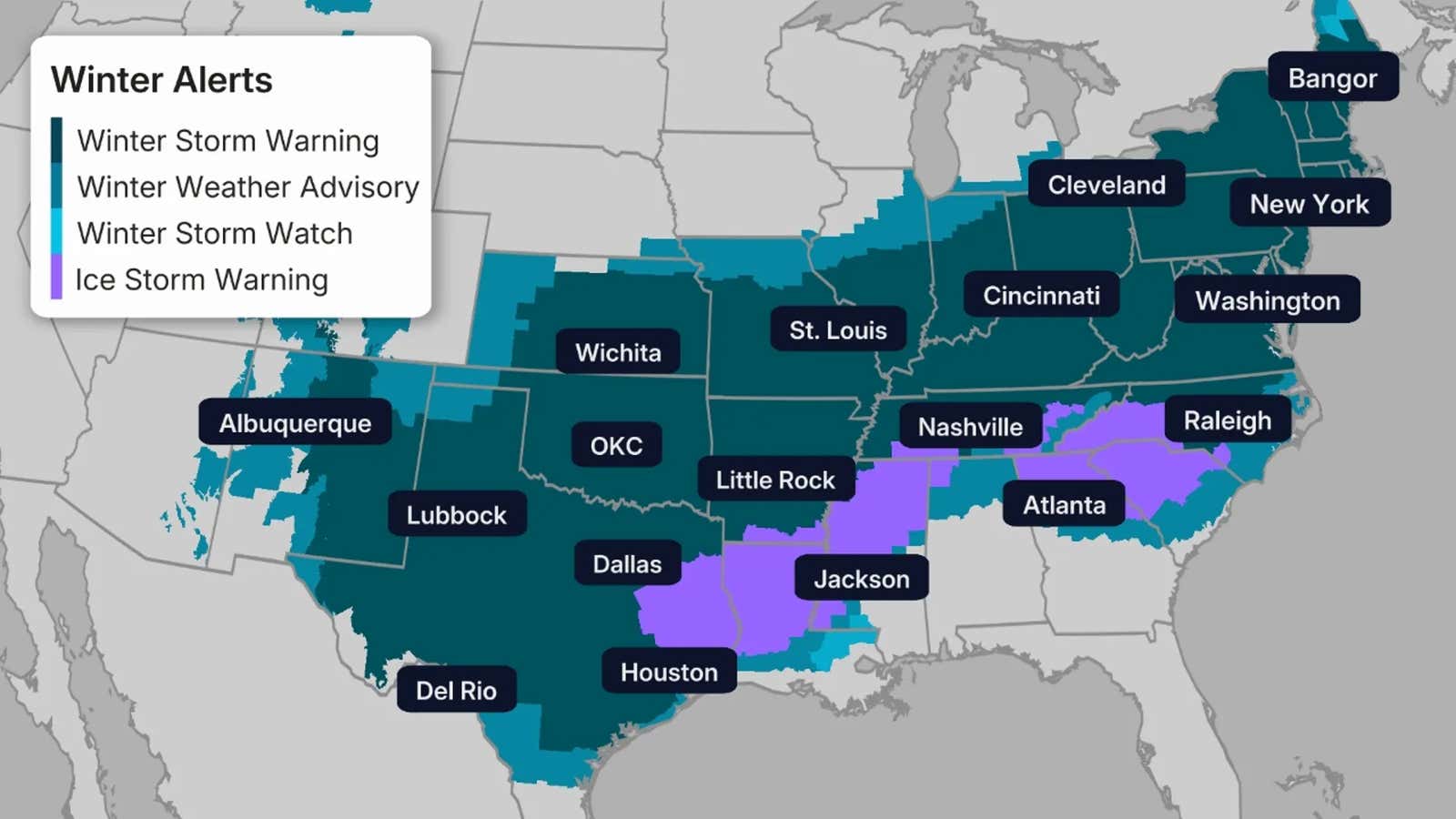
These were the various winter weather alerts from the National Weather Service for Winter Storm Fern on Jan. 24, 2026.
(Alerts: NOAA/NWS)
What don't we name?
Lake-effect snowstorms and pure arctic cold outbreaks are not named.
Winter storm names exclude any current Atlantic and eastern Pacific hurricane names on the National Hurricane Center lists for the next six years, and any retired hurricane names (those particularly deadly, destructive and historic).
How many winter storms happen?
Last season, 11 winter storms were named.
While that's not a large number of storms, there were several high impact storms, in addition to the aforementioned Winter Storm Fern.
- Post-Thanksgiving Winter Storm Bellamy smashed early-season and November records in four Midwest cities, including Chicago.
- A late February East Coast blizzard (Winter Storm Hernando) smashed records and dumped more than 30 inches of snow from New Jersey to Massachusetts.
- Mid-March Winter Storm Iona smashed all-time snowstorm records in parts of Wisconsin and Upper Michigan.
The previous season — 2024-25 — had 15 named winter storms.
When do they usually happen?
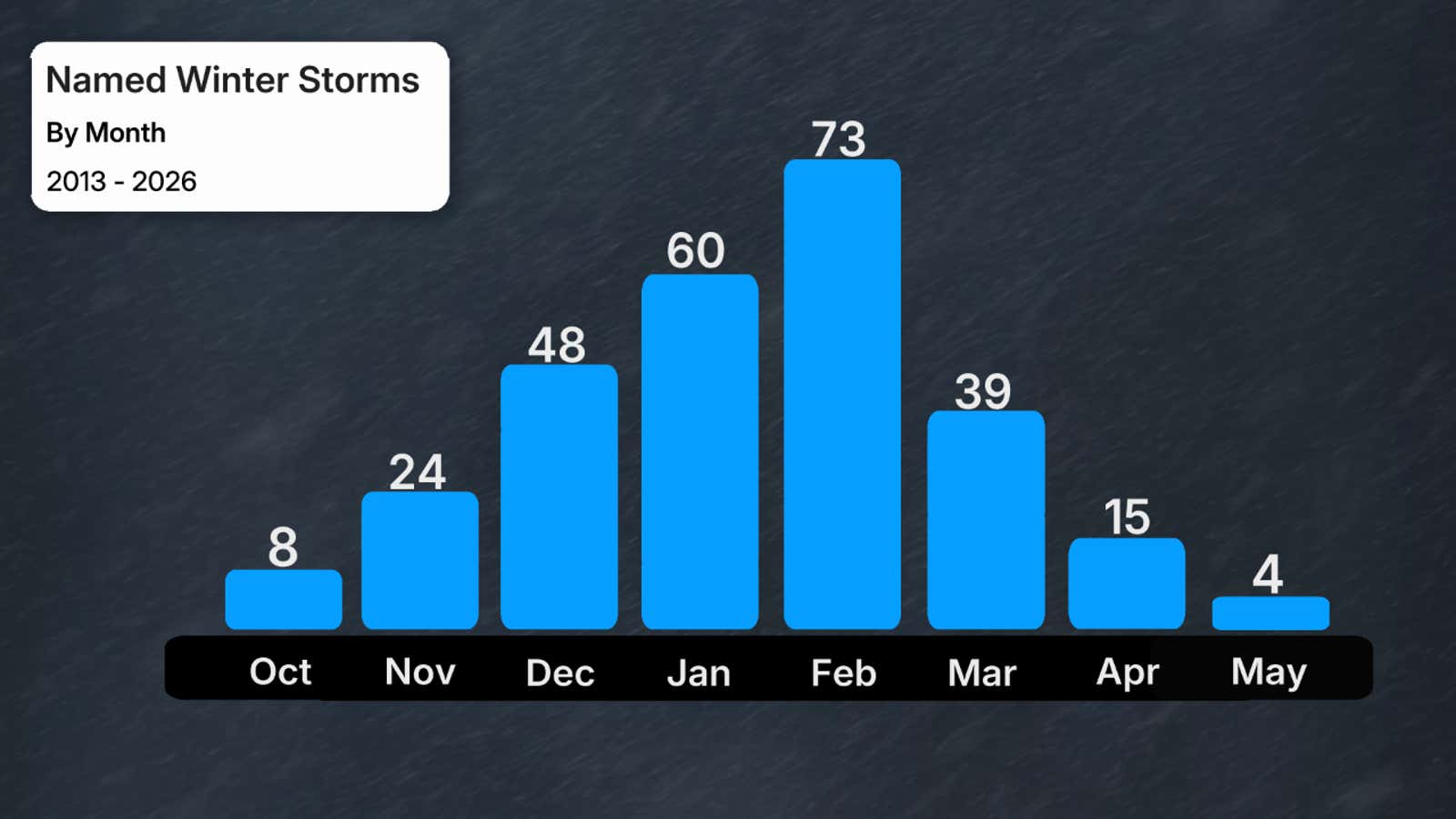
The first named winter storm of the season usually happens in November. However, the first storm has been named as soon as early October and as late as early December.
Of more than 250 winter storms The Weather Channel has named, the most active time of year has been from late January through February.
That's when active southern and sometimes northern branches of the jet stream spin up large, long-lived winter storms taking advantage of the most expansive cold air of the year.
There's a sharp drop off of storms from March through May, as warmer air begins to surge farther north.
However, March is also known for legendary storms with heavy snow, severe weather outbreaks and major flooding.
The last named winter storm of the season usually happens in April, though late-spring snowstorms can dump heavy, wet snow in the High Plains and Front Range of the Rockies in May.
(MORE: Mammoth Mountain's first snow of the season is a surprise)
Jonathan Erdman is a senior meteorologist at weather.com and has been covering national and international weather since 1996. Extreme and bizarre weather are his favorite topics. Reach out to him on Bluesky, X (formerly Twitter) and Facebook.
Loading comments...